
Why Major in Biology?
Biologists study the living world and engage in scientific research on everything from micro-organisms to ocean life. A major in this compelling field gives you a better understanding of the world and offers insights into the impact of biological principles on the human condition.
A biology major also prepares you to succeed in just about any career you can think of, from dentistry and zoology to marine biology. The analytical skills you'll learn as a biology major will translate to any area you're interested in exploring.
What You'll Learn
 At Belmont you’ll have the flexibility to tailor your studies to match your goals. You’ll choose from several tracks of study:
- General Biology leads to the broadest variety of educational and career opportunities.
- Ecology and Biodiversity is a great choice if you’re interested in wildlife, natural areas and research.
- Marine Biology prepares you for a career in the study of ocean life and marine organisms.
- Pre-Health prepares you for professional graduate programs such as physical therapy, occupational therapy, nurse practitioner, dentistry, physician’s assistant, medicine, dentistry or veterinary science.
- The Occupational Therapy (OTD) and Physical Therapy (DPT) 3+3 Programs offer a streamlined pathway for high-achieving students to enter our doctoral programs in Occupational Therapy and Physical Therapy after three years of focused undergraduate study. These programs provide an accelerated route to the completion of both degrees within a total of six years.
No matter which track you choose, you’ll get a deep understanding of biological principles, chemistry and statistics, and dive deep into topics such as animal behavior, genetics, neurobiology, ecology and zoology.
Program Details
Curious about your coursework? View requirements for this degree in the course catalog.
Biology to DPT 3+3
Belmont University's Accelerated Biology to Physical Therapy program offers a streamlined pathway for ambitious students aiming to obtain both a Bachelor of Science in Biology and a Doctor of Physical Therapy (DPT) degree within a total of six years. After three years of focused undergraduate study, students complete the DPT program in an additional three years, simultaneously earning their BS while undertaking prescribed graduate courses in the initial year. To qualify, students must express their intent to pursue the 3+3 program early in their Biology BS degree program, with potential consideration for late-entry applicants assessed on a case-by-case basis. This accelerated option demands adherence to rigorous requirements, including completion of major and prerequisite coursework, BELL Core, and WELL Core requirements within the undergraduate phase to be eligible for admission to the graduate program.
Biology to OTD 3+3
Belmont University's Accelerated Biology to Occupational Therapy program offers a streamlined pathway for ambitious students aiming to obtain both a Bachelor of Science in Biology and a Doctor of Occupational Therapy (OTD) degree within a total of six years. After three years of focused undergraduate study, students complete the OTD program in an additional three years, simultaneously earning their BS while undertaking prescribed graduate courses in the initial year. To qualify, students must express their intent to pursue the 3+3 program early in their Biology BS degree program, with potential consideration for late-entry applicants assessed on a case-by-case basis. This accelerated option demands adherence to rigorous requirements, including completion of major and prerequisite coursework, BELL Core, and WELL Core requirements within the undergraduate phase to be eligible for admission to the graduate program.
Lab Experience
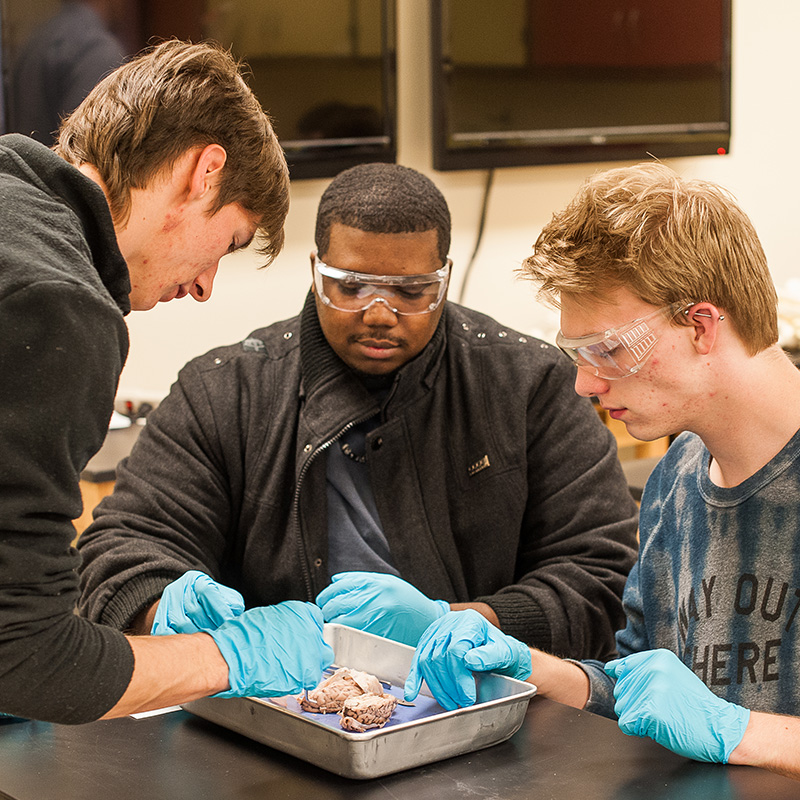
At Belmont, you’ll get hands-on experience in the lab — identifying insects, counting bacterial colonies, training zebrafish, running DNA gels and much more. You’ll also have the opportunity to collaborate with classmates from other disciplines and present your research findings at national conferences.
You'll learn in the $76 million Janet Ayers Academic Center, an 186,000-square-foot structure that houses 26 science labs outfitted with more than $2 million in equipment, including:
- State of the art spectrometers
- A microwave reaction chamber
- A cold room and incubators for biological studies
- A state-of-the-art laser laboratory
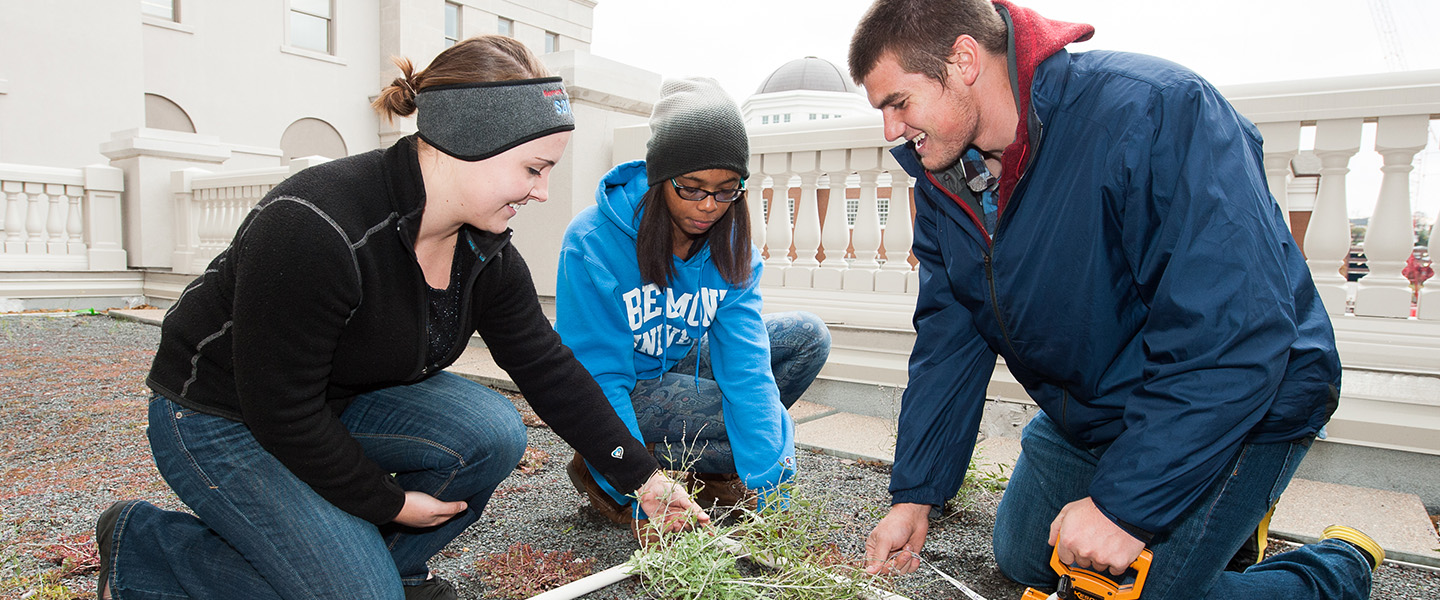
- Operational green roof
- Ecology/zoology/botany lab
- Anatomy and physiology labs
- Animal Locomotor Lab
- Small Cell Tissue culture lab
- Microscopy suite
- Cell/molecular/genomics lab
- Physiological lab with EEG, reaction time and biofeedback equipment
- Dissection lab
Career Possibilities
Studying the life sciences prepares you for dynamic careers in plant research, marine biology, medicine, pharmacology, teaching and more. Our students go on to careers in a wide range of disciplines including:
- Biologist
- Zoologist
- Ecologist
- Nutritionist
- Research scientist
- Naturalist
- Marine biologist
- Pharmacist
- Biology teacher

Erica Olfson
Biology
“Belmont’s biology program perfectly allows for close relationships with faculty and peers and pushes each student to achieve an incredible level of excellence, both inside and outside of the classroom. You have the ability to apply your learning hands-on, participate in research projects in numerous biological disciplines, take many upper-level courses, get involved in clubs and grow academically.”
Student Researchers Build Game-Changing Device
Three biology majors contributed to groundbreaking progress on a new device that can detect heavy metal contamination.
Request Information
Contact Us
College of Sciences & Mathematics
Chloe Ledford
Admissions Coordinator
(615) 460.5241
Email Chloe