
Peter Kuryla
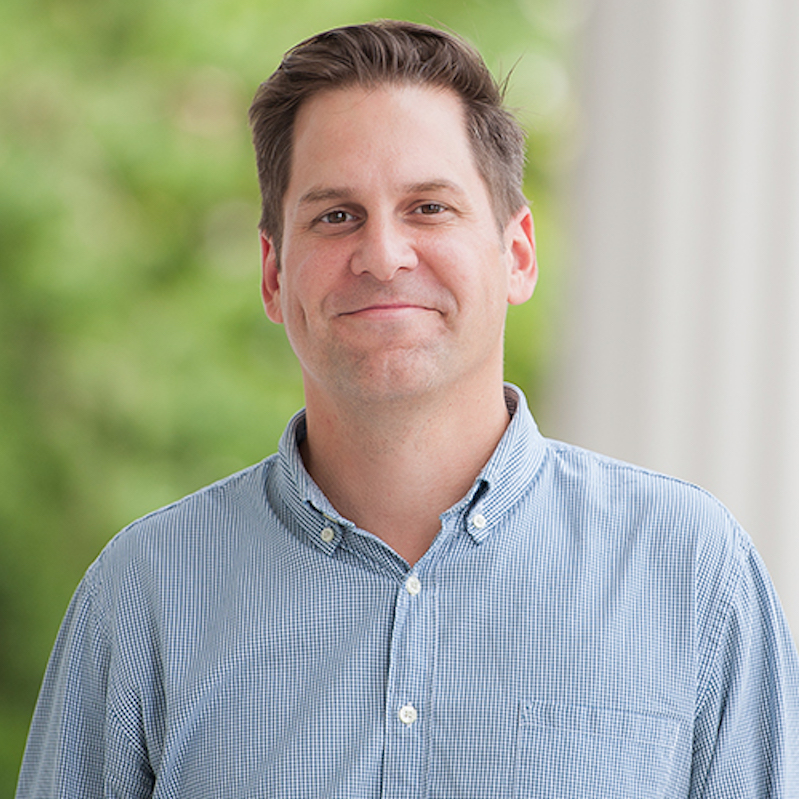
Professor
College of Liberal Arts & Social Sciences
Ph.D. in History, Vanderbilt University, Specialization: 20th century American intellectual and cultural history
Location: Ayers 2120
615.460.6694peter.kuryla@belmont.edu
Biography
I grew up a couple of hours south of Chicago, the great city where my parents were born and raised. I’m the grandson of immigrants. After a boyhood in central Illinois, I spent several years in Wichita Falls, Texas, where I earned my B.A. and M.A. degrees in history from Midwestern State University. After that I moved to Nashville, finishing a PhD in history at Vanderbilt University. I came to Belmont in 2008. I study the intellectual and cultural history of the United States, and I tend to focus on political thought along with American philosophy and literature after the Civil War, including the intersections between those things. I’m currently at work on a project having to do with the role of the jail (not the prison) in American culture. For a time, I was a regular blogger at the Society for United States Intellectual History (S-USIH) and a contributing writer for the Humanities Tennessee's Chapter 16.
At Belmont I teach several courses, among others American Thought and Culture after the Civil War, American Political Thought, 1920s America, The United States in Depression and War, Africa Imagined since 1890, and a course on what others have thought of us called "International Vistas: the US Viewed from Abroad." I'm very active in general education and the Honors program too, teaching Learning Communities courses for first year students along with a longstanding social science seminar on the city in American culture. In my classes, I try to get my students to think across traditional disciplinary and conceptual boundaries, take risks, follow their passions, and develop genuine curiosity about their being-in-the-world. I want to develop in my students a love of ideas, cultivating what the American historian Richard Hofstadter once described as the "playfulness" and "piety" that comes with the intellect. I figure that kind of life should equip students for whatever path they ultimately choose, whether that applies to a formal career or just a life well-lived.
Outside of the classroom I enjoy reading good fiction, listening to music and playing it, cooking, working with my hands—puttering around the house and yard, gardening, occasional shade-tree mechanic jobs—the kind of momentary satisfactions that come with repairing or making something.
Selected Publications/Activities
“Teaching the Great Barbecue: Ideas about Southern USA Foodways” S-USIH Blog (March 2021)
“Cheese Incidents: The Sense of Etiquette and Cases of Mistaken Identity” S-USIH Blog (December 2020)
“Seeing the Ordinary in the Extraordinary: William Eggleston’s Photographs Illuminate Southern Spaces in Surprising Ways,” Chapter 16 (January 2020)
"A Note on 'Difficult' Texts: Reading with Philosophers and Historians, Again,"S-USiH Blog (February 2018)
"Nietzsche's Uses and Abuses Part Three: Where the Rubber Hits the Road,"(USIH Blog, September 2017)
"Politics, Nostalgia, and the Strange Estrangements of the American Political Tradition," Society 55:2 (April 2018): 153-156
"Encountering the Southern Other: Imagining the Civil Rights Movement as Travel Narrative," Patterns of Prejudice 49:5 (December 2015): 522-545.
“Vastations and Prosthetics: Henry James, Sr. and the Transatlantic Education of William and Henry James,” chapter four in Martin Halliwell and Joel Rasmussen, eds. William James and the Transatlantic Conversation: Pragmatism, Pluralism, and Philosophy of Religion, Oxford University Press, 2014, 81-96.
“Ralph Ellison, Irving Howe, and the Imagined Civil Rights Movement,” Society50: 1 (January 2013): 10-15.
“Esthetic Sensitivity: The Sublime Architectures of Paul Conkin’s Puritans and Pragmatists” Historically Speaking (January 2012): 24-26.
“Barack Obama and the American Island of the Colorblind” Patterns of Prejudice, 45: 1&2 (April 2011): 119-132.