
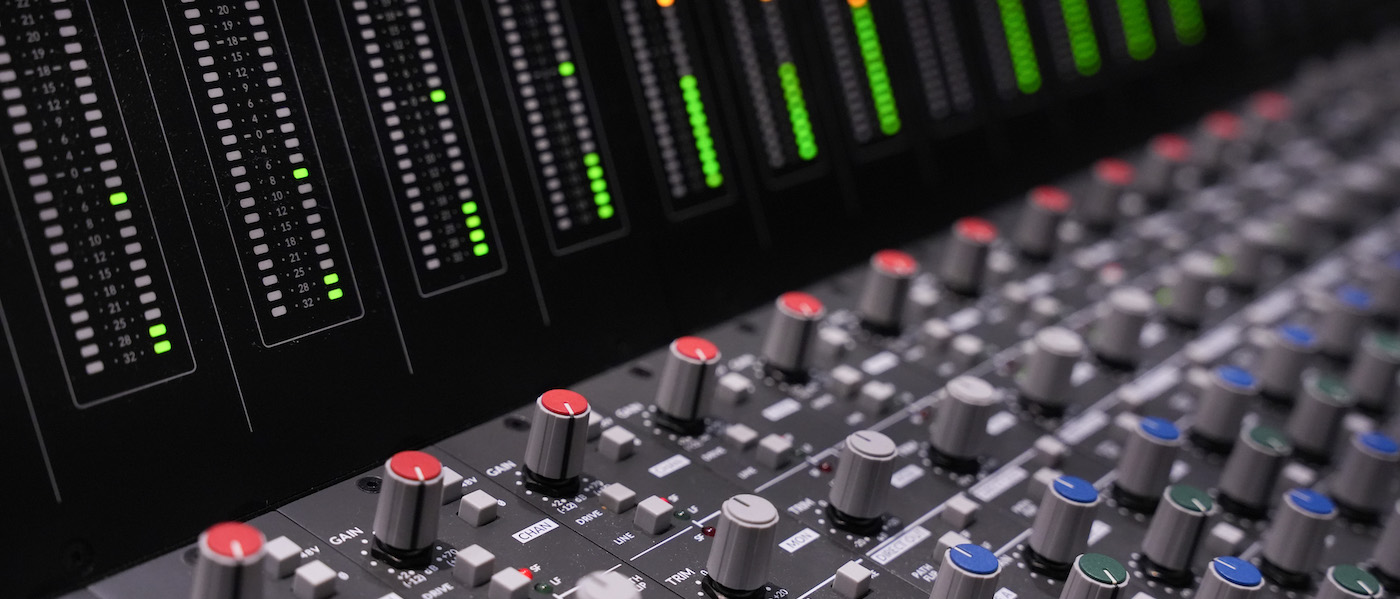
Why Belmont’s Audio Engineering Masters Program Stands Out
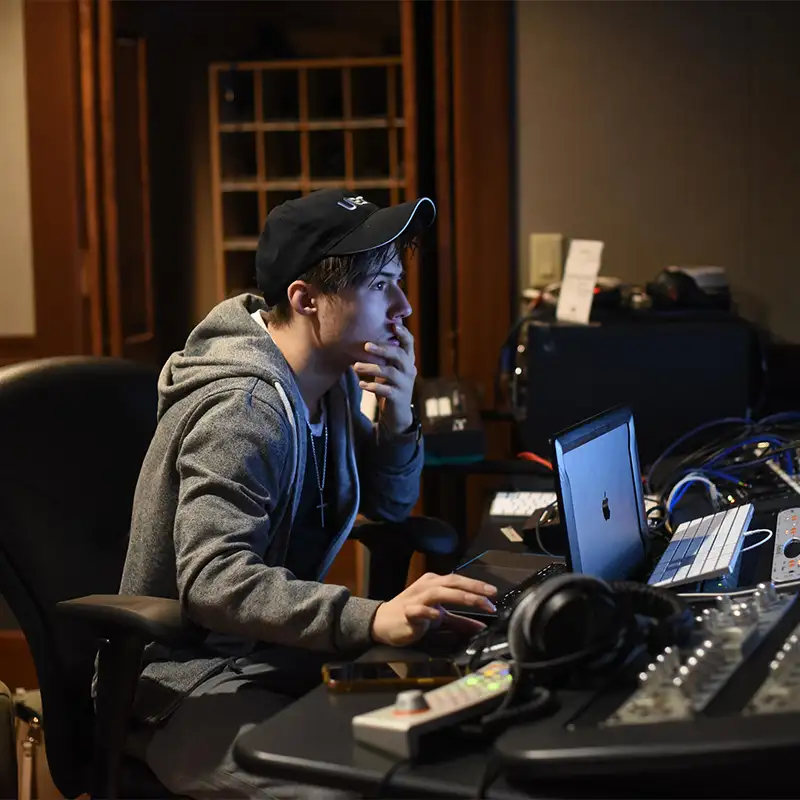 Belmont's program is designed for those who have a passion for audio and who have a background, skills or experience in live and/or studio music and production OR performance, computing, engineering, electronics, music and audio recording technology, acoustics or a similarly related discipline.
The MSAE program will expand your knowledge and enhance your theoretical and practical skills. Our curriculum allows you to have either a practitioner or academic focus, depending on whether you want to go into commercial or industrial research and design (R&D), work as a professional audio and recording engineer or pursue an advanced degree like the Ph.D.
As a graduate of the program, you will have the skills and knowledge to continue your professional and creative career; enter the industrial, governmental or education workforce; or continue your studies in an appropriate doctoral program.
Request Information
Study Audio Engineering in Nashville, the Center of Sound Innovation
Studying in Nashville, TN—a global center of sound innovation—offers far more than proximity to performance venues. Belmont’s campus is located just minutes from historic and modern recording facilities, national broadcast networks and audio tech companies. Graduate students benefit from hands‑on internships and networking with professionals across film, TV, gaming and immersive audio.
Nashville is home to more than 190 recording studios, and its local production ecosystem is among the most concentrated in the nation — with industry activity levels up to 30 times greater than the U.S. average (more than 10 times greater than New York or Los Angeles and even greater compared to Atlanta, Austin and New Orleans), according to Nashville Area Chamber of Commerce.

Belmont Tracks
Belmont Tracks is a YouTube channel showcasing the musical talents of Belmont student artists. Master of Science in Audio Engineering students taking the Dr. Doyuen Ko’s Remote Recording course record and mix the audio for every episode. Watch the Behind the Scenes video to learn more about their work, and click the link below to watch and subscribe to Belmont Tracks.
What You’ll Learn in the Audio Engineering Masters Program
- Acoustic and Electro-acoustic Measurement & Design
- Auditory Perception and Hearing Science
- Digital Audio, Computer Programming and Signal Analysis
- Research Design and Methods
- Studio Systems and Operations
- Sound Design for Mixed Media
- Mastering and Applied Critical Evaluation
- Advanced Concepts in Sonic Blending
- Historical Master Recording Techniques
Program Details
Courses You'll Take
Curious about your coursework? View requirements for this degree in the course catalog.
Students in the Master of Science in Audio Engineering work with award-winning faculty in state-of-the-art facilities.
On-campus production facilities include the multi-room R.E. Mulloy Student Studios, which features four control rooms, four edit bays and multiple recording spaces.
Off-campus facilities on Music Row include the historic Columbia Studio A and Quonset Hut Studio at our 34 Music Square East building as well as the world-renowned Ocean Way Nashville. Production equipment includes SSL Origin and vintage API recording consoles, vintage and modern tube microphones and a wide array of outboard equipment.
Audio and acoustic research takes place in both our production facilities and our anechoic chamber, located in the Johnson Center.
Admission requires completion of a bachelor’s degree (B.S., B.A., B.M., etc.) from an institution accredited under one of the seven active regional U.S. accrediting agencies.
Undergraduate students interested in admission to the program may apply after successful completion of ninety-six (96) undergraduate credit hours (or 75 percent of their respective program).
Current Belmont University undergraduate AET, AV and MBU Production majors may apply after completion of sixty-four (64) credit hours (during their Junior year) and may be admitted to take MSAE classes during their senior year in their undergraduate program of study.
To apply for admission to the MSAE program:
- Complete the online application including an essay describing your background, related interests and desired outcomes for participation in the program.
- Submit your application and pay the non-refundable graduate application fee.
- Schedule an interview with the program director/admission committee.
In order to be evaluated and considered for admission, you must:
- Have official transcripts submitted for all prior college-level coursework and degrees earned.
- Secure two recommendations from individuals who are qualified to evaluate your potential for successful masters-level graduate work. These should be requested and submitted electronically from within the online application portal. This option will appear after you have submitted your application.
- Submit a complete curriculum vitae and/or professional resume. This option will appear after you have submitted your application.
- International applicants whose native language is not English must have either TOEFL (www.ets.org/toefl) or IELTS (www.ielts.org/en-us) scores submitted directly from the testing agency.
- International applicants must have all transcripts from all foreign institutions evaluated by World Education Services (www.wes.org) or Joseph Silny & Associates (www.jsilny.com) before admission will be granted.
Transcripts
All official transcripts must arrive securely in a sealed and stamped envelope or via secure online submission from the issuing institution. When requesting an electronic transcript, email to belmontadmissions@belmont.edu.
Current students, please use your MyBelmont account to go to www.studentclearinghouse.org.
Application materials not submitted electronically should be mailed directly to: Office of Admissions, Belmont University, 1900 Belmont Blvd., Nashville, TN 37212.
Admissions Timeline
Admission advances on a rolling basis. If your application is complete by February 15, you will be notified in mid-March. If you are accepted into the program, you will be able to register for the fall term classes during the spring priority registration period in late March/early April.
If your application is completed after March 31, we will review your application as soon as it is complete. If you are accepted into the program, you will be able to register for the fall term classes during either the regular registration period in June/July or the late registration period prior to the start of classes in late August.
For more specific date information, view our academic calendar.
Suggested Application Planning Schedules
To meet the Priority Admission/Registration Deadline, set a target of January 31 to have all of your application materials submitted.
September: Complete and submit your application. Request official transcripts from all prior colleges attended. Request two recommendations from individuals who are qualified to evaluate your potential for successful masters-level graduate work.
October - November: Schedule an interview with the program director/admission committee via phone or online.
December - January: Come visit and get a feel for our beautiful campus, highly-qualified faculty and state-of-art facilities; and meet some of our amazing, innovative and creative students.
February - March: Confirm your admission and register for your classes.
To meet the Regular Admission/Registration Deadline: set a target of May 31 to have all of your application materials submitted.
January - February: Complete and submit your application. Request official transcripts from all prior colleges attended. Request two recommendations from individuals who are qualified to evaluate your potential for successful masters-level graduate work.
March - April: Schedule an interview with the program director/admission committee via phone or online.
June - July: Come visit and get a feel for our beautiful campus, highly-qualified faculty and state-of-art facilities; and meet some of our amazing, innovative and creative students. Confirm your admission. Register for classes.
Outcomes & Alumni Successes
Belmont graduates with an MS in Audio Engineering are contributing to some of the most innovative work in audio production, acoustic design and signal processing. Our alumni go on to become:
-
Studio and broadcast audio engineers
-
Acoustic consultants and system designers
-
A/V integration specialists
-
Audio software developers
-
Live sound and event technology managers
-
Educators and researchers in sound science and technology
We're committed to your success
Curb College's Professional Development team helps students and graduates grow their skills and networks, preparing them to enter the entertainment industry. To support this, our team offers one-on-one meetings, weekly workshops led by industry experts, off-campus networking events, and hundreds of internships each semester. We serve as ambassadors and connectors for Curb College students and graduates through active involvement in the entertainment world.
It's no wonder that 98% percent of Curb College graduates are employed, pursuing continuing education, or enlisted in the military within 6 months of graduation and 89% of employed graduates are in positions that align with their short or long term career goals.
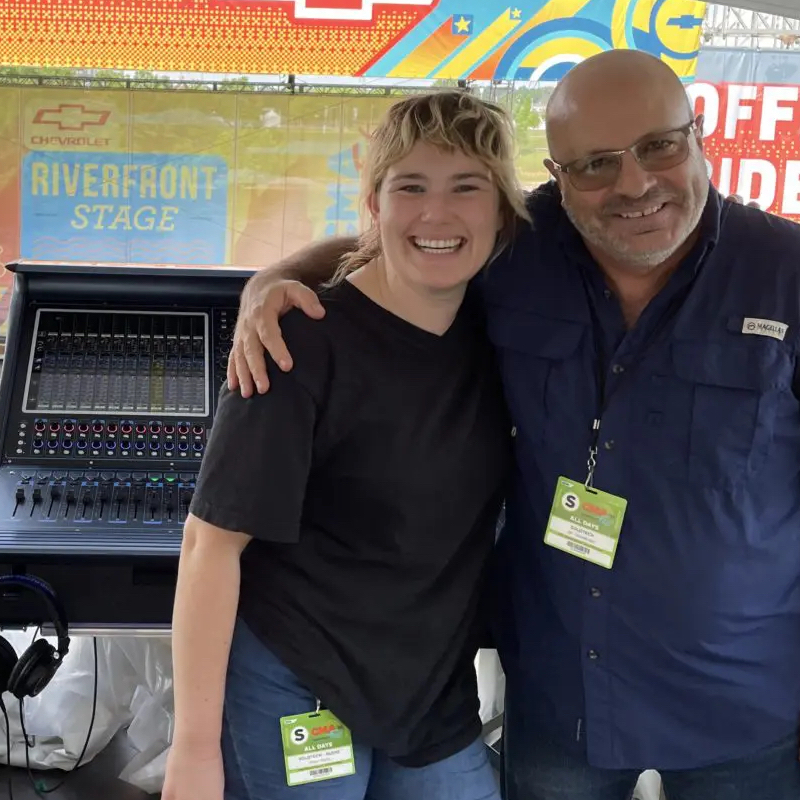
Emily Pikul
MS in Audio Engineering Technology
"Belmont’s graduate AET courses challenged me to understand signal flow and signal processes much more fully than I had ever known, which is critical to being a successful audio engineer. There’s so much planning, preparation and teamwork that goes into making shows happen successfully four days in a row, and I got to be part of the entire process through my internship with CMA Fest thanks to Belmont."
Career Possibilities
- Studio, live or broadcast sound engineer
- Acoustic designer
- A/V installation and operation technician
- Audio DSP/plugin design programmer/engineer
- Teacher and researcher in audio production and audio engineering
Learn from Industry Veterans
Belmont’s faculty includes engineers, developers, researchers and educators with backgrounds in broadcast, studio engineering, game audio, acoustic consulting and more. These professionals bring real-world expertise into every classroom and lab. You'll collaborate with professors who are actively shaping the future of audio engineering — through their research, projects and mentorship.


Wesley Bulla
Email: wesley.bulla@belmont.edu
Office Location: Johnson Center 331

Song Hui Chon
Email: songhui.chon@belmont.edu
Office Location: Johnson Center 332

James Cody
Email: james.cody@belmont.edu
Office Location: Johnson Center 333

Justin Dowse
Email: justin.dowse@belmont.edu
Office Location: REM Studios B1B

Jason Garner
Email: jason.garner@belmont.edu
Office Location: Johnson Center 365

Anderson Hall
Email: anderson.hall@belmont.edu
Office Location: Johnson Center 334

Gracie Hays
Office Location: Johnson Center 337

Michael Janas
Email: michael.janas@belmont.edu
Office Location: Johnson Center 336

Jim Kaiser
Email: jim.kaiser@belmont.edu
Office Location: Johnson Center 334


Jon D. Lechner
Email: jon.lechner@belmont.edu
Office Location: Johnson Center 485

Scott Munsell
Email: scott.munsell@belmont.edu
Office Location: 34 Music Square East, 220

Benjamin Poff
Email: benjamin.poff@belmont.edu
Office Location: 34 Music Square East, 220

Leslie Richter
Email: leslie.richter@belmont.edu
Office Location: Johnson Center 373


David Tough
Email: david.tough@belmont.edu
Office Location: Johnson Center 335

Andy Wildrick
Email: andy.wildrick@belmont.edu
Office Location: Johnson Center 338

Byron Williams
Email: byron.williams@belmont.edu
Office Location: 34 Music Square East, 220
Contact Us
Mike Curb College of Entertainment & Music Business
Wesley Bulla
Director & Professor of Graduate Audio Engineering Technology
615.460.5729
Email Wesley