
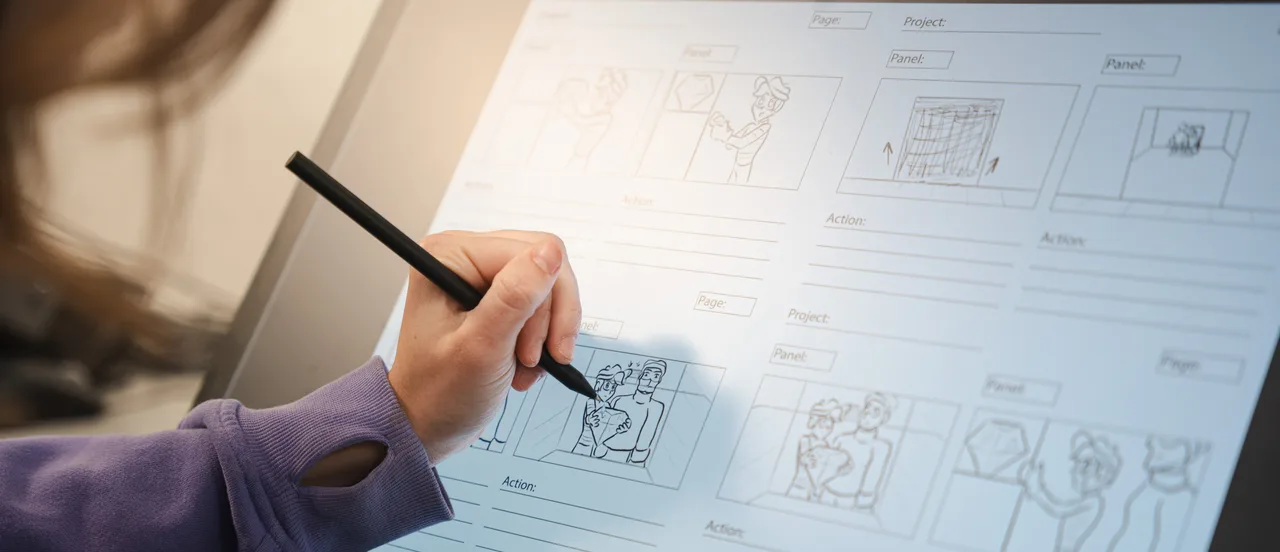
Why Study Animation & Media Arts at Belmont University?
To shape visual culture, you need to understand why stories work, how productions run and what it means to make something that connects. This degree brings together existing award-winning Belmont programs, teaching illustrators to direct, screenwriters to visualize and providing graduates with a reel built from real professional experience.
Program at a Glance
- Joint program: Watkins College of Art + Mike Curb College of Entertainment and Music Business
- 128 credit hours
- 3 emphasis areas: Illustration & Art Direction, Storytelling & Production and Interactive & Immersive
- Class Size: 15–17 students
- Career paths: include animation studios, film and virtual production, interactive media, themed entertainment, concert tour visuals, sports broadcasts and UX animation
- Housed within Watkins College of Art, NASAD-accredited since 1996
Program Distinctions
A Joint Program Between Two Leading CollegesStudents draw from two of Belmont's award-winning colleges — Watkins College of Art and the Mike Curb College — in one degree.
Industry Experience Built Into the DegreeFrom year one, students work with real professional assets, building toward a required internship and a Senior Project that ends in a public showcase.
Industry Tools for a Professional PaceStudents use the same tools found across animation studios, virtual production and immersive experience design.
Small Class, Studio-Based LearningWith 15–17 students per class, faculty know your work and your classmates become collaborators before they become colleagues.
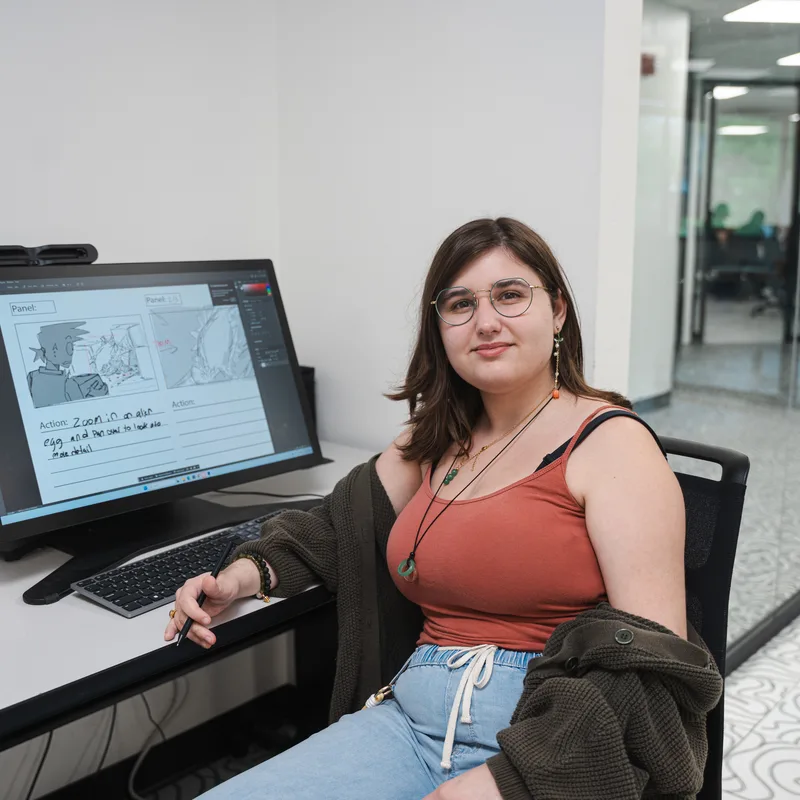
Is Belmont’s Animation & Media Arts BFA Right for You?
This program is built for makers: visual artists, writers, filmmakers and people who don't fit those labels at all. The skills behind animation and digital visualization are reshaping work across industries, from how surgeons plan procedures to how architects preview buildings to how brands turn complex data into something people can actually see and feel.
You may be strong if:- You're a visual artist drawn to narrative
- You're curious about how visuals solve real-world problems and bring ideas to life.
- You're already experimenting with animation, game engines, digital illustration or filmmaking, and you're ready for rigorous, structured training that meets you where you are.
- You want a small, studio-based program in Nashville where professors know your work, and your classmates become your creative collaborators.
- You want to explore the intersection of graphics and data.
 What You'll Learn in Belmont's Animation & Media Arts BFA
The curriculum builds from foundational skills to independent practice, preparing you to move fluidly between creative and production roles across industries.
- Visual Storytelling & Design Thinking: Communicating clearly and purposefully through image, sequence and composition; the foundational language of animation and media production.
- Animation Priciples & 3D Production: Character, motion, 3D modeling, lighting, materials, and visual development for film, interactive media, and emerging platforms.
- Real-Time Engine Workflows: Layout, previs, interaction and real-time rendering used across animation, games, virtual production, and immersive media.
- Collaborative Production Methods: Working within professional pipelines and cross-disciplinary teams that mirror real studio environments.
- Creative Leadership & Professional Communication: Critique, project management, client/community engagement and the ethical frameworks that shape professional practice.
- Portfolio & Career Readiness: A body of work developed throughout the degree, aligned to individual career goals in animation, visual effects, interactive media and adjacent fields.
Program Details
Curriculum
What does the Animation & Media Arts BFA curriculum look like?Belmont University’s Animation & Media Arts BFA is a 128-credit-hour degree structured to build from foundational skills to independent professional practice. The first year establishes core competencies, the second and third deepen technical and production skills, and the fourth year centers on a required internship and a two-semester Senior Project.
Emphasis Areas in the Animation & Media Arts BFAIn the upper division, students choose one of three emphasis areas that shape their coursework, studio practice, and Senior Project:
Illustration & Art Direction
What is illustration and art direction in animation? Students in this emphasis develop the foundational visual skills that drive animation production: figure drawing, illustration, character design, color and the aesthetic decision-making that defines a production’s look. Drawing on Watkins College of Art’s illustration faculty and facilities, this path is for students who think visually and want to lead the way a story looks.
Storytelling & Production
What does the Storytelling & Production emphasis cover? This path draws on the Mike Curb College’s strength in cinematic storytelling: screenwriting, directing, sound and production. Students develop the skills to guide a production from script to screen, learning to collaborate with animators, sound designers and producers in the same cross-disciplinary environment professional studios operate in.
Interactive & Immersive
What does the Interactive & Immersive emphasis prepare students for? This emphasis moves into the design of experiences that respond, adapt, and surround the viewer: museum installations, themed entertainment, augmented reality, VR production and interactive media. Students in this path are less likely to end up making animated cartoons and more likely to be designing animated interactions; the kind where two people experience the same piece differently. All students in the BFA complete a foundational VR Production course; this emphasis goes deeper.
Animation today exists far beyond what most people picture. Graduates of Belmont's Animation & Media Arts BFA are prepared for careers across the full breadth of where the field really lives, from traditional animation studios and virtual production sets to concert tour design, sports and broadcast graphics, museum installations, themed entertainment, UX animation, architectural visualization and corporate media. Anywhere you see motion, there's a career for someone trained to make it.
Nashville's growing creative industry is a particular advantage for AMA graduates. The city's music industry relies heavily on animation. Almost every major tour involves animated stage visuals, and the demand for animators who can work at that scale is growing fast. Professional sports, corporate conferences and large-scale live events all run on the same pipeline. Students who study animation in Nashville graduate into a market that is actively building itself around their skills.
Because the program is built on transferable creative and technical skills (not just proficiency in a single tool or format) graduates are positioned to move across industries as the field evolves, not locked into a single career path on day one.
- Industry Studio (Year 1)
- Guest Critiques & Milestone Reviews
- Required Intership
- Senior Project (Two Semesters)

Ready to take the next step?
FAQs
Belmont University's Animation & Media Arts BFA is a joint undergraduate degree program offered through Watkins College of Art and the Mike Curb College of Entertainment and Music Business, preparing students for professional careers across animation, film, interactive media, immersive experience design and the broader creative industry — anywhere motion, story and digital visualization intersect.
The Animation & Media Arts BFA at Belmont University is designed to be completed in four years of full-time study.
Belmont's Animation & Media Arts BFA offers three emphasis areas: Illustration & Art Direction, Storytelling & Production and Interactive & Immersive. Students choose one emphasis in the upper division, and it shapes their coursework, studio practice and Senior Project.
Each class in Belmont's Animation & Media Arts BFA enrolls 15–17 students, making it a small, studio-based program where students work closely with faculty and move through the curriculum as a class of collaborators.
The professional experience built into Belmont's Animation & Media Arts BFA begins in the first year, when students work with real assets from professional industry partners through the Animation Industry Studio — not hypothetical briefs, but actual creative problems. From there, students receive feedback from industry guest critics throughout the program, complete a required supervised internship and complete a two-semester Senior Project that culminates in a public showcase.
The careers you can pursue with an Animation & Media Arts BFA from Belmont University span a wide range of industries — including animation studios, film and virtual production, interactive media companies, themed entertainment, immersive experience design, motion design for live events, concert tour visuals, sports and broadcast graphics, branded digital content and UX animation. Nashville's growing creative industry provides direct access to many of these career pathways to graduates with an animation degree.
Digital animation is the process of creating moving images using computer software and technology. It encompasses 2D and 3D animation, motion graphics, visual effects, and interactive media used across film, web, gaming and live production.
A digital animation degree prepares you for UX/UI roles at software companies, agencies and startups. Motion design and UX animation are growing intersections in the tech industry.
Animators can pursue UX careers such as motion designer, UX animator, interactive media developer and product designer. As apps and digital platforms increasingly prioritize animated interactions, the demand for animators with UX sensibility continues to grow.
Animation & Media Arts Major Sample Sequence
| Year | Required courses |
|---|---|
| Year 1 | Art of Storytelling (MOT 1115) · Animation Studio I (AMA 1020) · 3D Modeling for Animation (AMA 1030) · Surface & Color (ART 1011) · Observation and Drawing (ART 1030) · Animation Industry Studio (AMA 1050) · Art History: Pre-modern (ADH 2800) |
| Year 2 | Animation Studio II (AMA 2020) · Real-Time Engine I (AMA 2060) · Lighting, Materials & Visual Development (AMA 2120) · Character Design (AMA 2130) · Intro to Post Visual Effects (MOT 2xxx) · Portfolio Practices (AMA 2850) · Art/Design/Animation History elective |
| Year 3 | VR Production (AMA 3035) · Animation Administration (AMA 3040) · Media Ethics (ETM 3110) · Emphasis area coursework (15 hours across Years 3–4) · Art/Design/Animation History elective · Major elective |
| Year 4 | Senior Project I (AMA 4015) · Senior Project II (AMA 4016) · Internship (AMA 4850) · Major elective · Free electives |
General Education requirements (40 hours) are distributed across all four years.
Voices From Watkins
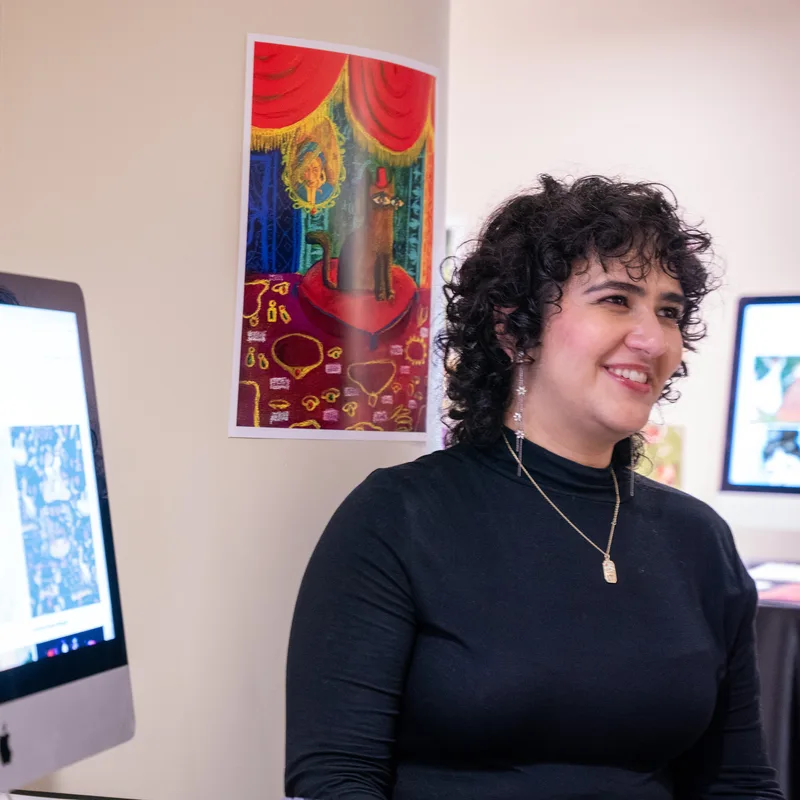
Marina Ibrahim
Illustration
“Watkins helped me build the courage to push the boundaries of my art. I am creating things that I would have never imagined myself creating even just a year or two ago. I am no longer afraid to try something new or even absurd.”
Lily van Wijk
Studio Art
“I've picked up so many skills and passions that I had never focused on before. I have met so many personable professors already and it makes me excited to continue my time in Watkins. My major requires me to take at least one course in most mediums offered at Watkins. I love this because it is not restrictive, and it allows me to figure out what I enjoy over time.”
Contact Us
Ellie Aldrich
Admissions Coordinator
615.460.6772
Email Ellie