

Master of Social Work Program Overview
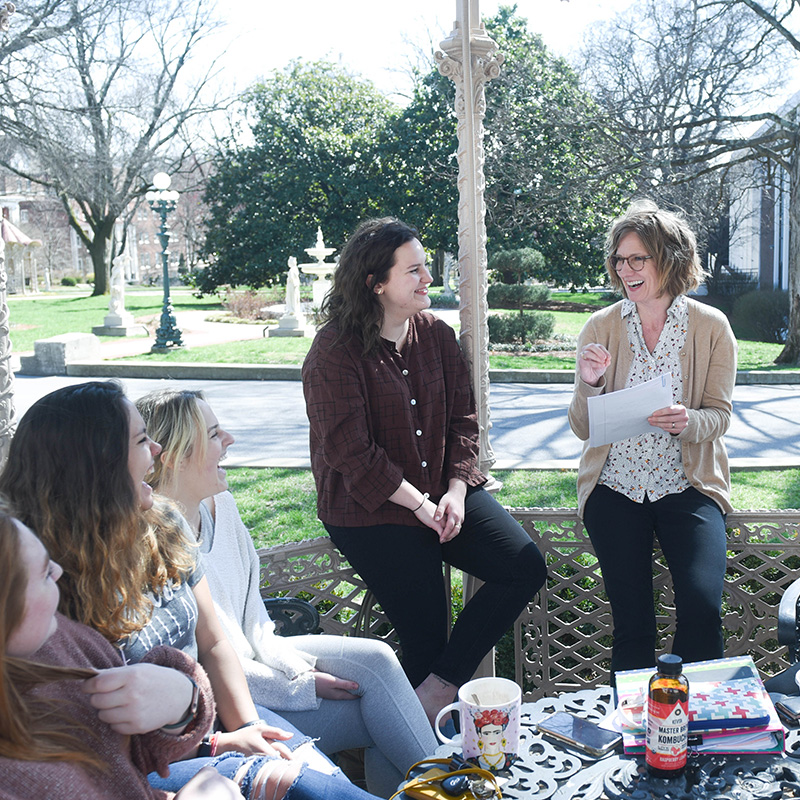 The Belmont School of Social Work's master's in social work program delivers the academic rigor, clinical practice and personal support you need to launch a career in social work.
-
Advanced Standing option for BSW holders, with no summer bridge work
-
Training in Belmont’s 60,000-sq-ft Center for Interprofessional Engagement and Simulation
-
Licensure preparation integrated into coursework and mentoring
-
900+ hours of personalized field experience, including options at your workplace
-
Close mentorship from expert, licensed faculty
-
A unique focus on trauma-informed care, advocacy and leadership
Learn More About Belmont's MSW
Advance your career with Belmont’s Master of Social Work (MSW) program. Small classes, personalized fieldwork, and built-in licensure prep set you apart.

Why Earn Your Master of Social Work at Belmont?
At Belmont, earning your MSW means more than completing coursework — it’s about joining a supportive community, gaining hands-on experience and preparing for licensure and long-term career success.
- Student-Centered Support: From day one, faculty partner with you to design a program of study and field placements that fit your passions and goals. Students are known, supported, and mentored every step of the way.
- Hands-On Learning in Real Settings: Through MSW field placements in agencies, schools, health care systems and nonprofits, you’ll apply classroom learning to practice — preparing for immediate impact after graduation.
- Preparation for Licensure and Career Success: Belmont’s Master of Social Work program integrates test prep into your courses so you graduate ready for your state’s social work license exam.
Curriculum and Learning Experience
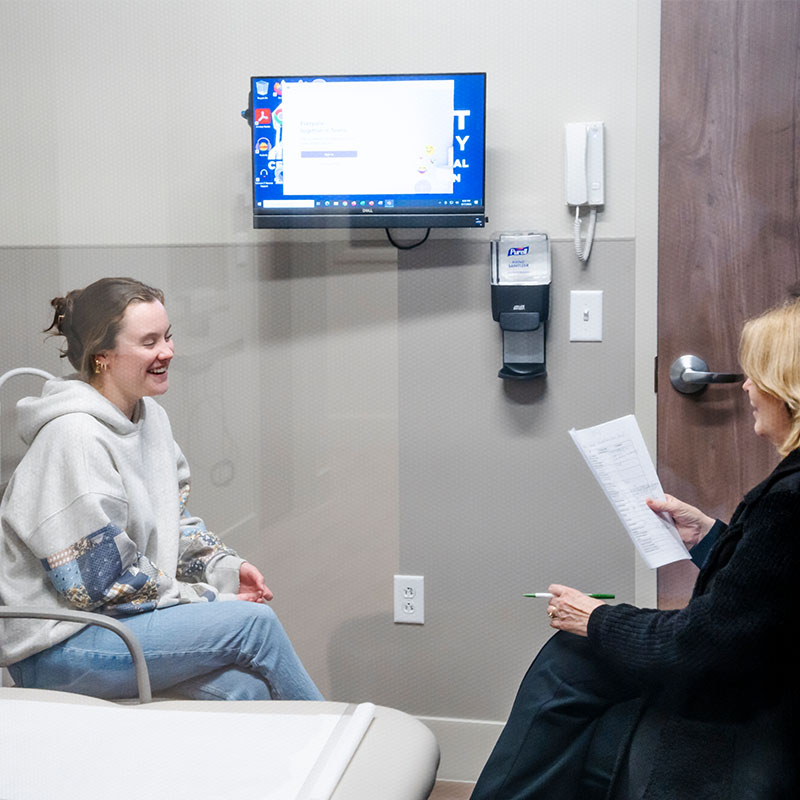
The Master in Social Work curriculum at Belmont is designed to prepare students for advanced practice through a balance of theory, research and real-world application.
Our program emphasizes critical thinking, evidence-based practice and the ability to engage with clients and communities across diverse settings.
Core Coursework: In the classroom, masters in social work students develop essential competencies in clinical practice, policy analysis, advocacy and organizational leadership. Courses integrate a trauma-informed and social justice perspective, ensuring graduates are equipped to address the complex needs of individuals, families and communities.
Program Details
Advanced Standing Option: If you already have a CSWE-accredited BSW, you can complete your Master of Social Work degree in as little as one year, thanks to Belmont’s true two-semester advanced standing program.
Simulation-Based Training: Unique to Belmont, MSW students learn in our 60,000-sq-ft Center for Interprofessional Engagement and Simulation, counseling simulated clients, conducting home visits and practicing therapy techniques in a supportive environment.
Courses You'll Take
Curious about your coursework? View requirements for this degree in the course catalog.
Year One
| Semester 1: Fall | Hours | Semester 2: Spring | Hours |
|---|---|---|---|
| SWK 5000 Social Policy, History, & Ethics | 3 | SWK 5500 Social Work Research Methods | 3 |
| SWK 5100 Social Work Practice I: Individuals & Families | 3 | SWK 5600 Social Work Practice II: Groups, Organizations, & Communities | 3 |
| SWK 5200 Exploring Human Diversity | 3 | SWK 5700 Social Work Policy Analysis and Advocacy | 3 |
| SWK 5300 Human Behavior in the Social Environment | 3 | SWK 5800 Psychopathology | 3 |
| SWK 5400 Field Instruction 1 (200hrs) | 3 | SWK 5900 Field Instruction 2 (200hrs) | 3 |
| Total Hours | 15 | Total Hours | 15 |
Year Two
| Semester 3: Fall | Hours | Semester 4: Spring | Hours |
|---|---|---|---|
| SWK 6000 Advanced Practice with Individuals & Families | 3 | SWK 6400 Advanced Practice with Organizations & Communities | 3 |
| SWK 6100 Advanced Practice with Groups | 3 | SWK 6500 Evaluation for Advanced Social Work Practice | 3 |
| SWK 6200 Trauma Theory in Practice | 3 | SWK 6600 Leadership for Advanced Social Work Practice | 3 |
| SWK 6000 Level Elective | 3 | SWK 6000 Level Elective | 3 |
| SWK 6300 Field Instruction 3 (250hrs) | 3 | SWK 6700 Field Instruction 4 (250hrs) | 3 |
| Total Hours | 15 | Total Hours | 15 |
Year One
| Semester 1: Fall | Hours | Semester 2: Spring | Hours |
|---|---|---|---|
| SWK 5000 Social Policy, History, & Ethics | 3 | SWK 5500 Social Work Research Methods | 3 |
| SWK 5100 Social Work Practice I: Individuals & Families | 3 | SWK 5600 Social Work Practice II: Groups, Organizations, & Communities | 3 |
| SWK 5200 Exploring Human Diversity | 3 | SWK 6000: Level Elective | 3 |
| Total Hours | 9 | Total Hours | 9 |
Year Two
| Semester 3: Fall | Hours | Semester 4: Spring | Hours |
|---|---|---|---|
| SWK 6200 Trauma Theory in Practice | 3 | SWK 5700 Social Work Policy Analysis and Advocacy | 3 |
| SWK 5300 Human Behavior in the Social Environment | 3 | SWK 5800 Psychopathology | 3 |
| SWK 5400 Field Instruction 1 (200hrs) | 3 | SWK 5900 Field Instruction 2 (200hrs) | 3 |
| Total Hours | 9 | Total Hours | 9 |
Year Three
| Semester 5: Fall | Hours | Semester 6: Spring | Hours |
|---|---|---|---|
| SWK 6000 Advanced Practice with Individuals & Families | 3 | SWK 6600 Leadership for Advanced Social Work Practice | 3 |
| SWK 6100 Advanced Practice with Groups | 3 | SWK 6400 Advanced Practice with Organizations & Communities | 3 |
| SWK 6000 Level Elective | 3 | SWK 6500 Evaluation for Advanced Social Work Practice | 3 |
| SWK 6300 Field Instruction 3 (250hrs) | 3 | SWK 6700 Field Instruction 4 (250hrs) | 3 |
| Total Hours | 12 | Total Hours | 12 |
|
Semester 1: Fall |
Hours |
Semester 2: Spring |
Hours |
|---|---|---|---|
|
SWK 6000 Advanced Practice with Individuals & Families |
3 |
SWK 6400 Advanced Practice with Organizations & Communities |
3 |
|
SWK 6100 Advanced Practice with Groups |
3 |
SWK 6500 Evaluation for Advanced Social Work Practice |
3 |
|
SWK 6200 Trauma Theory in Practice |
3 |
SWK 6600 Leadership for Advanced Social Work Practice |
3 |
|
SWK 6000 Level Elective |
3 |
SWK 5800 Psychopathology |
3 |
|
SWK 6300 Field Instruction 3 (250hrs) |
3 |
SWK 6700 Field Instruction 4 (250hrs) |
3 |
|
Total Hours |
15 |
Total Hours |
15 |
Applications for admission and an applicant’s credentials are received exclusively through the Social Work Centralized Application Service (SocialWorkCAS).
Learn more about the admissions process
The Belmont University MSW Program has achieved candidacy for accreditation by the Council on Social Work Education’s (CSWE) Board of Accreditation (BOA). Candidacy status indicates that it has made progress toward meeting standards of program quality evaluated through a peer review accreditation process. A program that has attained candidacy status has demonstrated a commitment to meeting the accreditation standards but has not yet demonstrated full compliance. Students that are admitted to candidate programs in the fall (or later) of the academic year in which the program is granted candidacy status will be retroactively recognized as graduates from a CSWE-BOA accredited program as long as the program attains initial accreditation. Candidacy is typically a 3-year process and attaining candidacy does not guarantee that a program will eventually attain initial accreditation. Candidacy applies to all program options, which include locations and delivery methods. Accreditation provides reasonable assurance about the quality of the program and the competence of students graduating from the program. Review our program’s candidacy status in CSWE’s Directory of Accredited Programs. For more information about social work accreditation, contact CSWE’s Department of Social Work Accreditation.
Once accredited by the Council on Social Work Education, those earning a Master’s degree in Social Work from Belmont University have met the first of several steps needed to attain state licensure to practice social work at the Master’s level. It is important to note that state licensure is a separate process from that of attaining your master’s degree and requires additional criteria. For example, Tennessee requires that additional examinations be taken. State licensure is handled through state boards and not through Belmont University. Students are advised to seek licensure information through the requisite state Department of Health’s Social Work Licensure Board. Belmont’s faculty and staff are a resource for Belmont MSW graduates seeking licensure but are the licensing authority.
Note that a felony conviction may affect a graduate's ability to be eligible to take the national certification examination or obtain state licensure.
What is Field?
Field Partners
Committed to Your Success

Belmont University's MSW program prioritizes career and professional development by providing students with access to the Office of Career & Professional Development, career coaching, resume assistance and networking events like job fairs. These resources, along with field placements and employer connections, equip students with the skills needed to excel in the workforce.
Additionally, the MSW curriculum is designed with employer needs in mind, emphasizing trauma-informed care and leadership in advocacy practice. To further support graduates, the program offers licensure prep courses for the LMSW exam, ensuring they are well-prepared for professional success.
97% of College of Pharmacy & Health Science graduates are employed, pursuing continuing education, or enlisted in the military within 6 months of graduation and 97% of employed graduates are in positions that align with their short or long term career goals.
Learn more about Career & Professional Development at Belmont
Career Possibilities
A Master of Social Work degree opens doors to a wide range of career possibilities, offering unparalleled versatility in both the public and private sectors. Graduates can work in health care, education, mental health, policy advocacy, nonprofit organizations and government agencies, addressing diverse social issues from mental health support to community development.
With skills in counseling, advocacy, and program management, social workers are equipped to make a difference in various environments. Whether in direct practice or leadership roles, the opportunities for social work professionals are vast, allowing them to create lasting impact across communities.
Licensed Clinical Social Workers (LCSW) provide mental health therapy and counseling to individuals, families, and groups facing various psychological and emotional challenges. They assess clients' needs, develop treatment plans, and employ therapeutic techniques to promote mental well-being.
LCSWs often work in diverse settings, including hospitals, private practices, and community organizations, addressing issues such as anxiety, depression, and trauma. Additionally, they may offer case management services, connecting clients with resources and support systems to enhance their overall quality of life.
Mental and Behavioral Health counselors play a crucial role in assisting individuals struggling with various mental health issues, including alcoholism, addictions, and depression. They provide guidance and support to help clients develop coping strategies and improve their overall well-being.
These professionals often work in diverse settings, such as rehabilitation centers, hospitals, and private practices. By fostering a supportive environment, behavioral disorder counselors empower their clients to make positive changes in their lives.
Military Affairs Social Workers provide support and counseling to military personnel, veterans, and their families. They address mental health issues, such as PTSD and depression, and help clients navigate the challenges associated with military life.
These professionals often collaborate with military organizations and community resources to ensure comprehensive care. Additionally, they may offer crisis intervention and assist with the reintegration process after deployment.
Non-Profit Leaders use their expertise to develop and implement programs that address social issues and improve community well-being. They leverage their understanding of human behavior and social systems to advocate for marginalized populations and drive organizational change.
These leaders foster collaboration among staff, volunteers, and community partners to maximize resources and impact. Additionally, they focus on securing funding and resources to sustain initiatives, ensuring the non-profit's mission is effectively realized.
Hospital Social Workers assist patients and their families in navigating the health care system during hospital stays. They provide emotional support, counseling, and resources for coping with medical diagnoses and treatment plans.
These professionals also help with discharge planning, ensuring patients have the necessary support and services post-hospitalization. Additionally, they may advocate for patients' needs and coordinate with medical staff to facilitate comprehensive care.
Frequently Asked Questions About MSW Programs
Yes, a master’s in social work (MSW) is worth it if you want to advance your career, increase earning potential and qualify for licensure-required roles. With an MSW, you can move into clinical practice, leadership, or specialized fields that aren’t open to those with only a bachelor’s degree.
Belmont’s MSW prepares graduates with hands-on training, trauma-informed care expertise and licensure prep to make the degree both practical and rewarding.
A traditional Master of Social Work program typically takes two years of full-time study, while an advanced standing MSW (for students with a CSWE-accredited BSW) can often be completed in just one year.
Belmont’s MSW offers both formats — a two-year track and a true two-semester advanced standing option with no summer bridge required.
Yes, you are welcome to apply for Belmont's MSW program in the year preceding your graduation. All credits associated with your bachelor's degree must be completed before June 1, and your final transcript must be sent to Belmont.
The highest paying jobs in social work are typically in clinical practice, health care and leadership roles such as clinical directors, social work administrators or health care social workers.
No, students do not need an undergraduate degree in social work to apply. We do not require a specific major to apply for the MSW. Common majors include psychology, child and family studies, sociology, public policy and other social science disciplines.
No, Belmont University's MSW program does not require an interview. However, the faculty reserves the right to request an introductory interview to ensure that we can fully evaluate your application for admission.
Additionally, information sessions and campus preview days will be scheduled throughout the year to offer students an opportunity to visit Belmont and learn more about the MSW and School of Social Work in person!
Yes, there is a part-time option enrolling now. Please reach out to your admissions counselor for further information.
Yes, students with undergraduate course credit from a CSWE-accredited baccalaureate social work program, earned within the last seven years, are entitled to have generalist-equivalent course credit evaluated for waiver, regardless of the undergraduate degree they hold or their ability to enter the advanced standing program.
Applicants requesting a transfer of credits must also meet specific criteria and provide additional documentation. Institutional policy holds graduate applicants can request the transfer of up to 15 graduate credit hours, while advanced standing transfer applicants can request up to 9 credits.
Yes, there are scholarships available and we encourage early applications to be considered for these. Additionally, students who have previously graduated from Belmont University with an undergraduate degree earn a 20% reduction of the cost of graduate tuition when enrolling into a Belmont graduate program. Students must complete the graduate application by the appropriate deadline and be accepted to the graduate program. No additional institutional scholarships, grants, assistantships, and/or discounts can be applied if opting to receive the alumni discount.
Additionally, students also fund tuition through loans or private sources. All questions concerning financial aid should be directed to our Student Financial Services department. You can reach the Student Financial Services office by phone at 615-460-6403 or online.
Belmont does not offer graduate student housing but does have resources available to students who are looking to relocate to the Nashville area.
Contact Us
College of Pharmacy & Health Sciences
Sarah Caylor
Assistant Director of Graduate Admissions
(615) 460.6722
Email Sarah
Schedule a Call